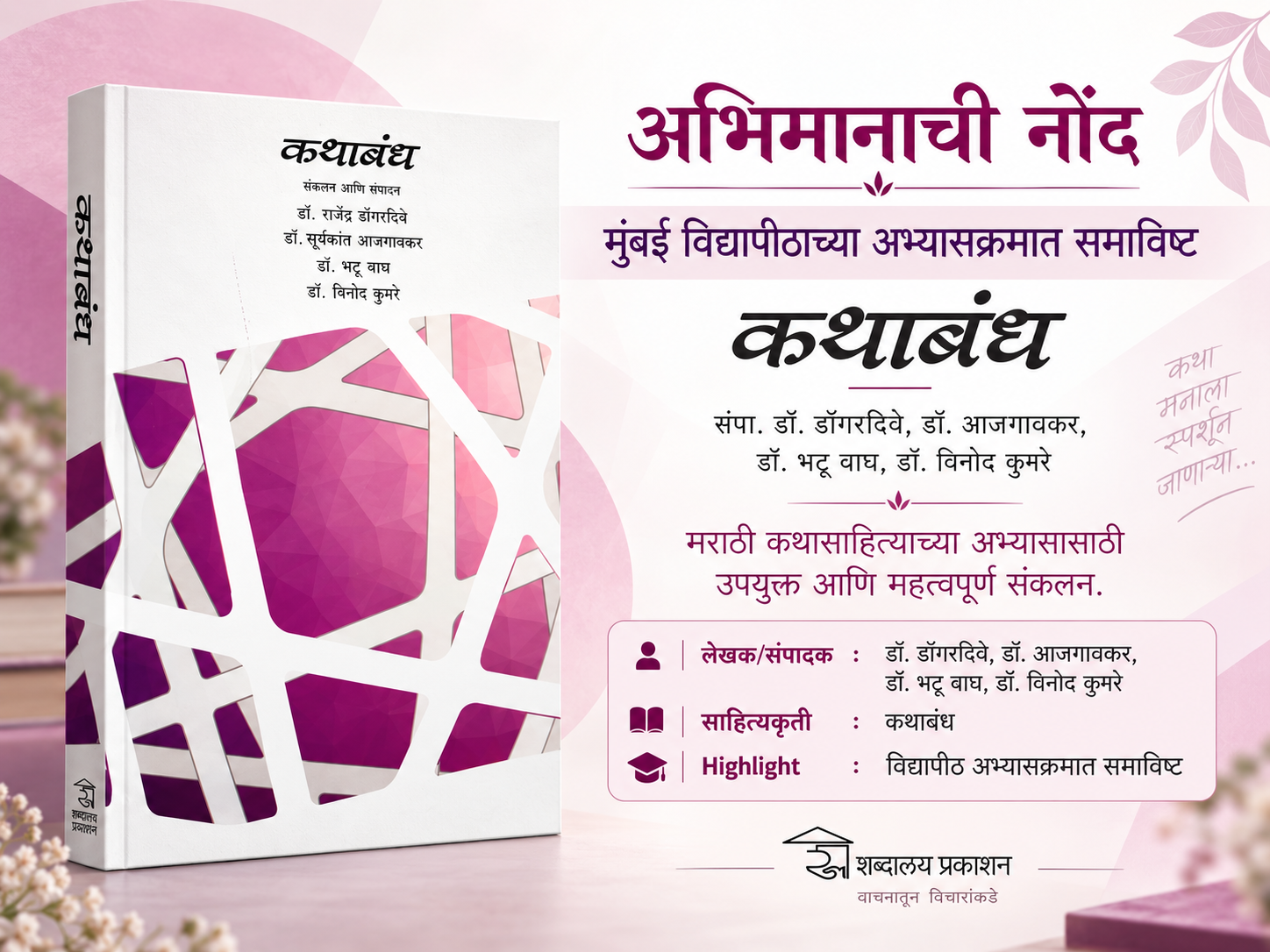
मराठी कथासाहित्याच्या विविध प्रवाहांचा, बदलत्या स्वरूपाचा आणि समृद्ध विकासपरंपरेचा व्यापक परिचय करून देणारे ‘कथाबंध’ हे महत्त्वपूर्ण पुस्तक मुंबई विद्यापीठाच्या अभ्यासक्रमात समाविष्ट झाले आहे. डॉ. राजेंद्र डोंगरदिवे, डॉ. सूर्यकांत आजगावकर, डॉ. भटू वाघ आणि डॉ. विनोद कुमरे यांनी संकलित व संपादित केलेले हे पुस्तक मराठी कथेच्या विविध रूपांचा अभ्यास करणाऱ्या विद्यार्थ्यांसाठी विशेष उपयुक्त ठरते.
मराठी कथा हा साहित्यप्रकार काळानुसार सातत्याने बदलत आणि विस्तारत गेला आहे. पारंपरिक कहाणी आणि गोष्ट यांपासून सुरू झालेला हा प्रवास पुढे लघुकथा, नवकथा, गूढकथा, दलित कथा, ग्रामीण कथा, स्त्रीवादी कथा, आदिवासी कथा आणि महानगरीय कथा अशा अनेक प्रवाहांतून समृद्ध झाला. ‘कथाबंध’ या विविध कथाप्रकारांचा आणि त्यांच्या बदलत्या आशयाचा अभ्यासपूर्ण परिचय घडवते.
मानवी जीवन, समाज आणि संस्कृती बदलत गेली तशी मराठी कथेची अभिव्यक्तीही बदलली. एकेकाळी नीतीबोध किंवा शिकवण देणाऱ्या स्वरूपात दिसणारी कथा पुढे मानवी जीवनातील गुंतागुंत, भावविश्व, सामाजिक संघर्ष, अस्मिता, बदलती मूल्यव्यवस्था आणि व्यक्तीच्या अंतर्मनाचा शोध घेणारे प्रभावी साहित्यिक माध्यम बनली.
‘कथाबंध’चे विशेष महत्त्व म्हणजे मराठी कथेचा स्थूल अनुभवातून सूक्ष्म आणि अतिसूक्ष्म जीवनदृष्टीकडे झालेला प्रवास समजून घेण्याची संधी. आधुनिक मराठी कथा केवळ घटना सांगत नाही; ती माणसाच्या जाणिवा, मानसिकता, सामाजिक परिस्थिती आणि बदलत्या काळाचे अनेक स्तर उलगडून दाखवते.
या पुस्तकातून विद्यार्थ्यांना दलित साहित्य, ग्रामीण जीवन, स्त्रीवादी दृष्टिकोन, आदिवासी अनुभव, महानगरीय वास्तव आणि समकालीन मानवी प्रश्न यांचे कथासाहित्यातील प्रतिबिंब समजते. विविध कथा आणि कथाप्रवाहांचा अभ्यास केल्यामुळे मराठी समाजजीवनातील बदल आणि साहित्याच्या बदलत्या अभिव्यक्तीचा परस्परसंबंधही स्पष्ट होतो.
कथेचा विकास एका बाजूला तिच्या साहित्यिक तंत्रामध्ये होत असताना दुसऱ्या बाजूला तिचा विषयविस्तारही सतत वाढत गेला. समाजातील विविध स्तर, वेगवेगळ्या अनुभवविश्वातील माणसे आणि बदलत्या सामाजिक जाणिवांना मराठी कथेत स्थान मिळत गेले. त्यामुळे मराठी कथासाहित्य हे आधुनिक समाजाचे बहुआयामी प्रतिबिंब म्हणून विकसित झाले.
‘कथाबंध’चा मुंबई विद्यापीठाच्या अभ्यासक्रमात समावेश हा या पुस्तकाच्या शैक्षणिक उपयुक्ततेची आणि मराठी कथासाहित्याच्या अभ्यासातील महत्त्वाची दखल आहे. मराठी भाषा आणि साहित्याचा अभ्यास करणाऱ्या विद्यार्थ्यांना कथेचा इतिहास, तिचा विकास, प्रमुख प्रवाह आणि विविध सामाजिक-सांस्कृतिक संदर्भ समजून घेण्यासाठी हे पुस्तक एक महत्त्वपूर्ण संदर्भग्रंथ ठरते.
शब्दालय प्रकाशनासाठी ही अभिमानाची नोंद आहे. मराठी साहित्याच्या अभ्यासासाठी उपयुक्त, वैविध्यपूर्ण आणि विचारप्रवर्तक साहित्य विद्यार्थ्यांपर्यंत पोहोचवण्याच्या प्रवासात ‘कथाबंध’ला मिळालेली ही विद्यापीठीय मान्यता विशेष महत्त्वाची आहे.
पुस्तक: कथाबंध
संकलन व संपादन: डॉ. राजेंद्र डोंगरदिवे, डॉ. सूर्यकांत आजगावकर, डॉ. भटू वाघ, डॉ. विनोद कुमरे
मान्यता: मुंबई विद्यापीठाच्या अभ्यासक्रमात समाविष्ट
विषय: मराठी कथा आणि तिचे विविध प्रवाह
प्रमुख प्रकार: लघुकथा, नवकथा, गूढकथा, दलित कथा, ग्रामीण कथा, स्त्रीवादी कथा, आदिवासी कथा, महानगरीय कथा
शैक्षणिक महत्त्व: मराठी कथेचा विकास, कथातंत्र, सामाजिक जाणिवा आणि बदलते जीवनदर्शन यांचा अभ्यास
‘Kathabandh’, an important collection and academic study of Marathi short-story traditions, has been included in the University of Mumbai curriculum. Compiled and edited by Dr. Rajendra Dongardive, Dr. Suryakant Ajgaonkar, Dr. Bhatu Wagh and Dr. Vinod Kumre, the book offers students a broad understanding of the development, diversity and changing forms of Marathi short-story literature.
The Marathi short story has evolved through several literary stages and forms. Beginning with traditional storytelling and tales, Marathi fiction gradually expanded into short stories, Navkatha, mystery stories, Dalit stories, rural stories, feminist stories, Adivasi stories and metropolitan stories. Kathabandh brings these diverse streams together within a meaningful academic framework.
As society, culture and human experience changed, Marathi storytelling also transformed. Stories that once focused primarily on moral instruction gradually developed into a sophisticated literary form capable of exploring the complexities of human life, identity, social conflict, emotional experience and changing cultural values.
One of the key strengths of Kathabandh is its exploration of the movement of Marathi fiction from broader social narratives towards increasingly subtle and layered representations of human experience. Modern Marathi short stories do more than narrate events; they examine the inner world of individuals while also reflecting wider social realities.
The book introduces readers and students to several major currents in modern Marathi literature. Dalit narratives explore questions of social inequality, identity and dignity; rural stories portray the realities of village life; feminist writing examines women’s experiences and changing gender relationships; Adivasi stories bring indigenous lives and perspectives into literary discourse; and metropolitan stories reflect the complexity of urban existence.
Through these varied literary forms, Kathabandh presents Marathi short-story literature as a dynamic record of social and cultural change. The development of the Marathi story has taken place not only in narrative technique but also in the expansion of subjects, voices, communities and experiences represented in literature.
The work is therefore valuable for students studying Marathi literature, Indian short stories, literary criticism, cultural studies and modern Indian literature. It helps readers understand how literary forms evolve alongside changes in society, human relationships and cultural consciousness.
The inclusion of Kathabandh in the University of Mumbai syllabus highlights its academic relevance and value as a resource for the systematic study of Marathi storytelling. Students can use the book to explore the history, development, narrative techniques and major thematic movements of Marathi short fiction.
For Shabdalaya Publication, this university recognition represents a proud milestone. It reinforces the publication’s commitment to making academically valuable and culturally significant Marathi literature available to students, teachers, scholars and readers.